
Three-course menu for orange tip butterfly caterpillars - and a snack for a wasp

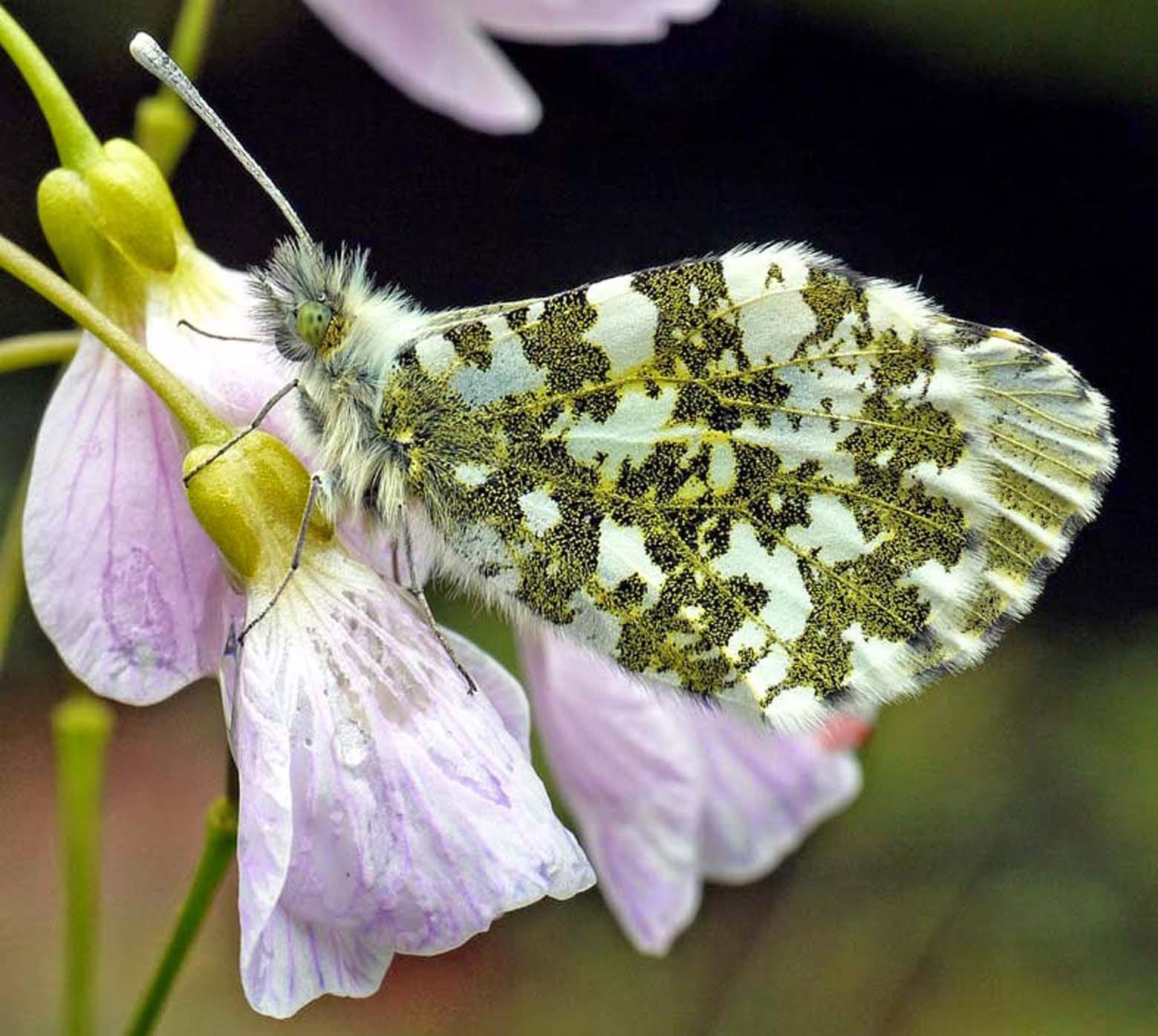
Another spring has come and gone (sigh), and with it the orange tip butterflies Anthocharis cardamines. I saw a couple of late stragglers last week but their flight season is over for another year.
Meanwhile, the caterpillars that have hatched from eggs laid on three foodplants in the garden are growing fatter every day.
Lady’s smock aka milkmaids aka cuckoo flower Cardamine pratensis (photo above) is one of the favourite caterpillar food plants but I can’t really grow enough of this, even when I propagate it from leaf cuttings. The larvae are known to be cannibalistic which may be why the butterflies generally only lay one egg per host plant.
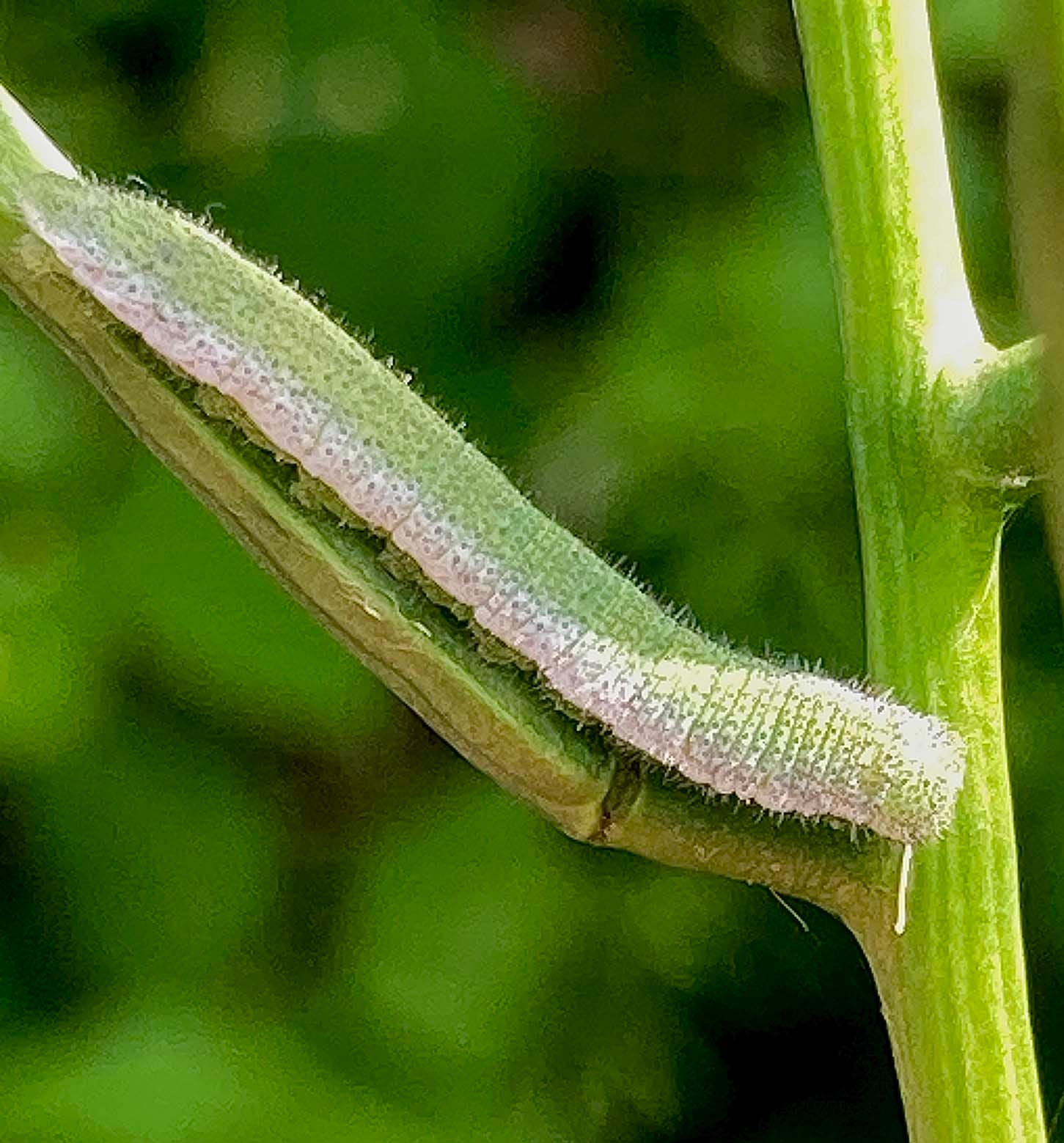
The ubiquitous, and very easy to grow, hedge garlic aka aka garlic mustard aka Jack-by-the-hedge Alliaria petiolata is probably the best native caterpillar food plant for orange tips. The cryptically coloured larvae are almost perfectly camouflaged when they lie along its seed pods, making them quite difficult to spot.
But there’s a problem, even for the most laissez-fare wildlife gardeners: this plant self-seeds prolifically and is deep-rooted, so its very invasive.
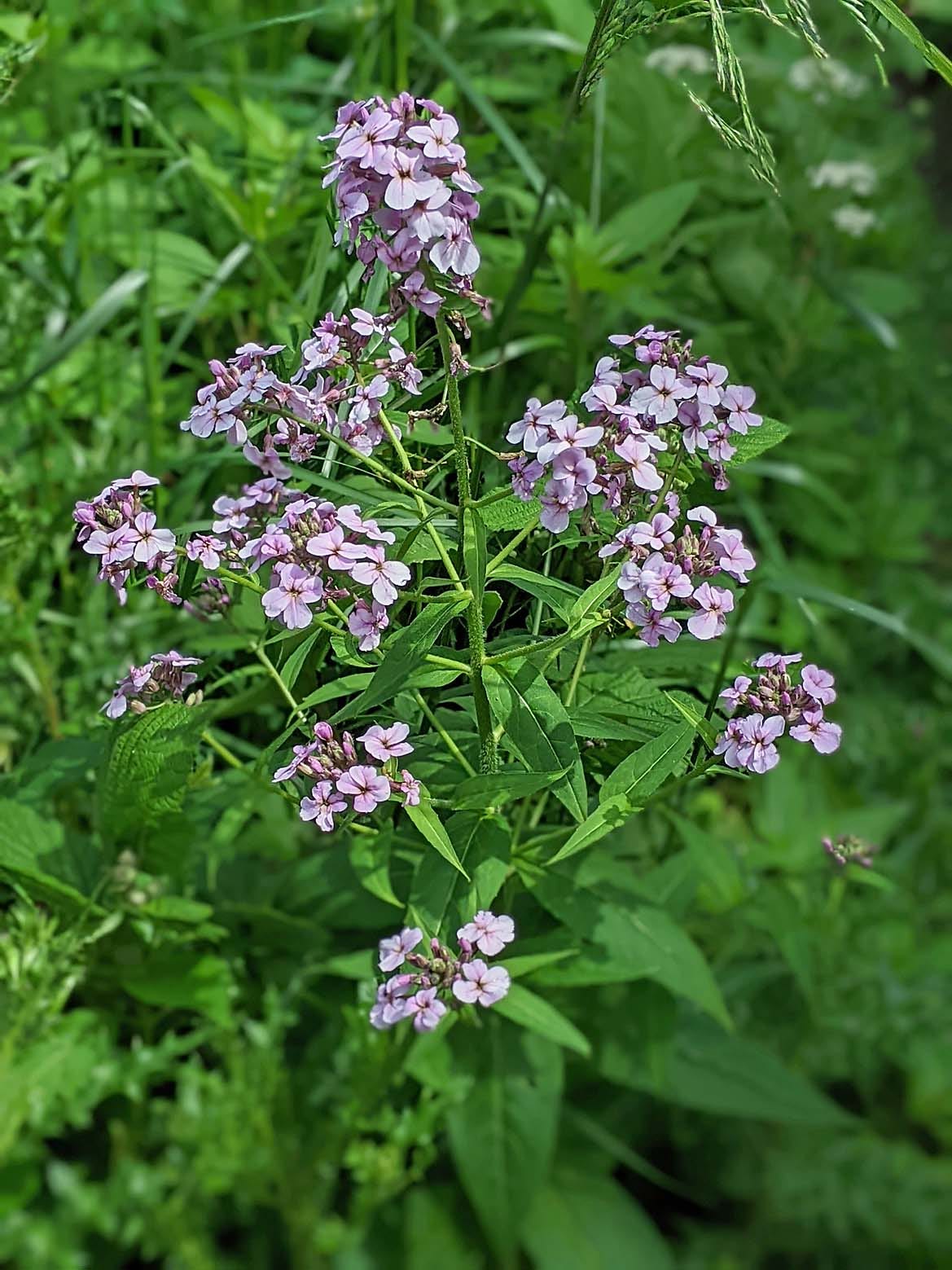
But here’s a fine, non-native alternative: dame’s violet aka sweet rocket Hesperis matrionalis, native to Eurasia, that’s naturalised in bank-side vegetation along the river Wear, here in Weardale, and in many other parts of Britain. Orange tip caterpillars thrive on its long, thin seed pods. It has an exquisite carnation fragrance on summer evenings.
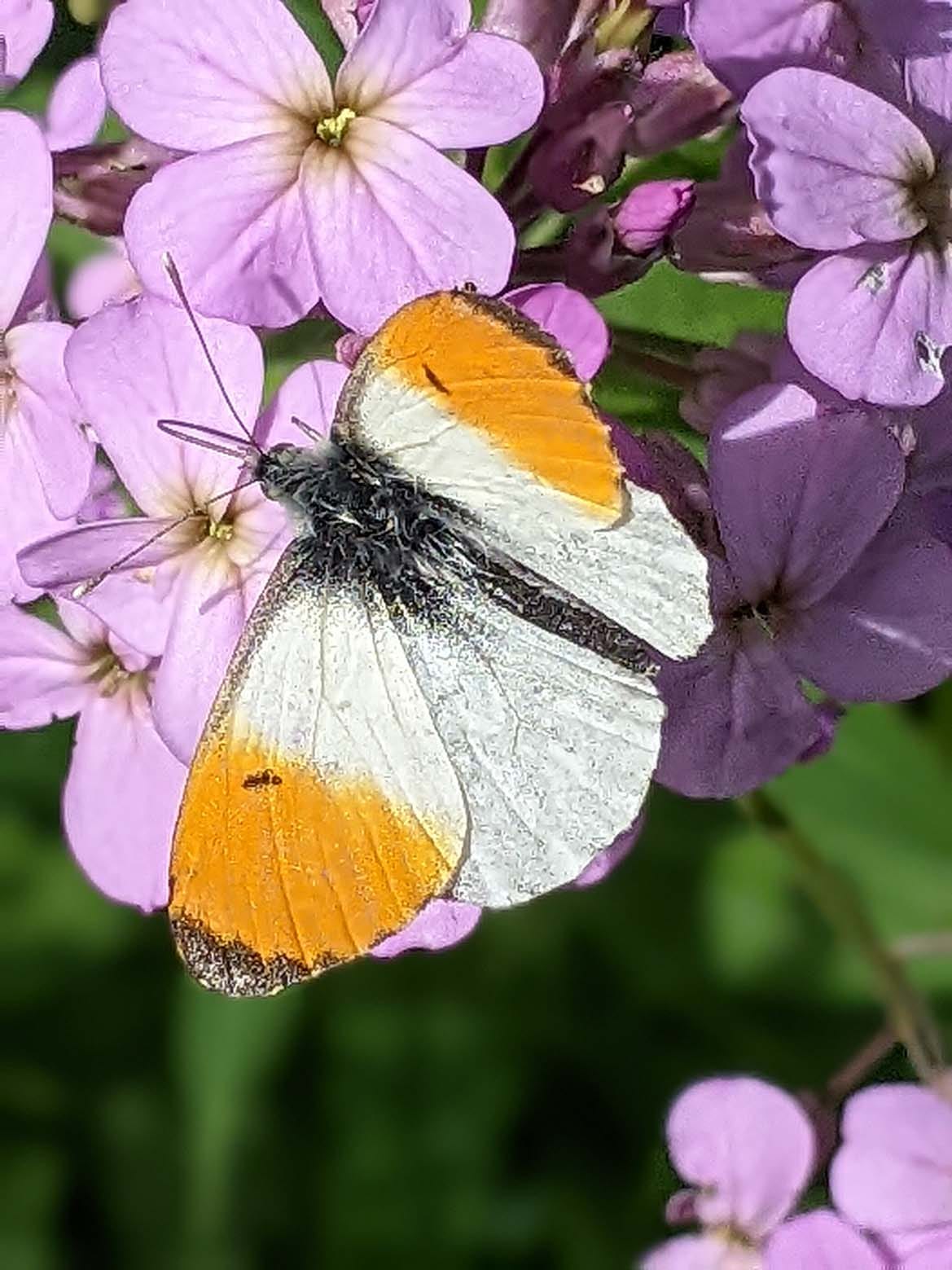
There are mauve and white forms of Hesperis. The plant is biennial but if you sow seeds for a couple of years and let some plants self-seed it forms a self-perpetuating population thereafter. Young plants aren’t deep rooted, so are easily removed if they appear in the wrong places.
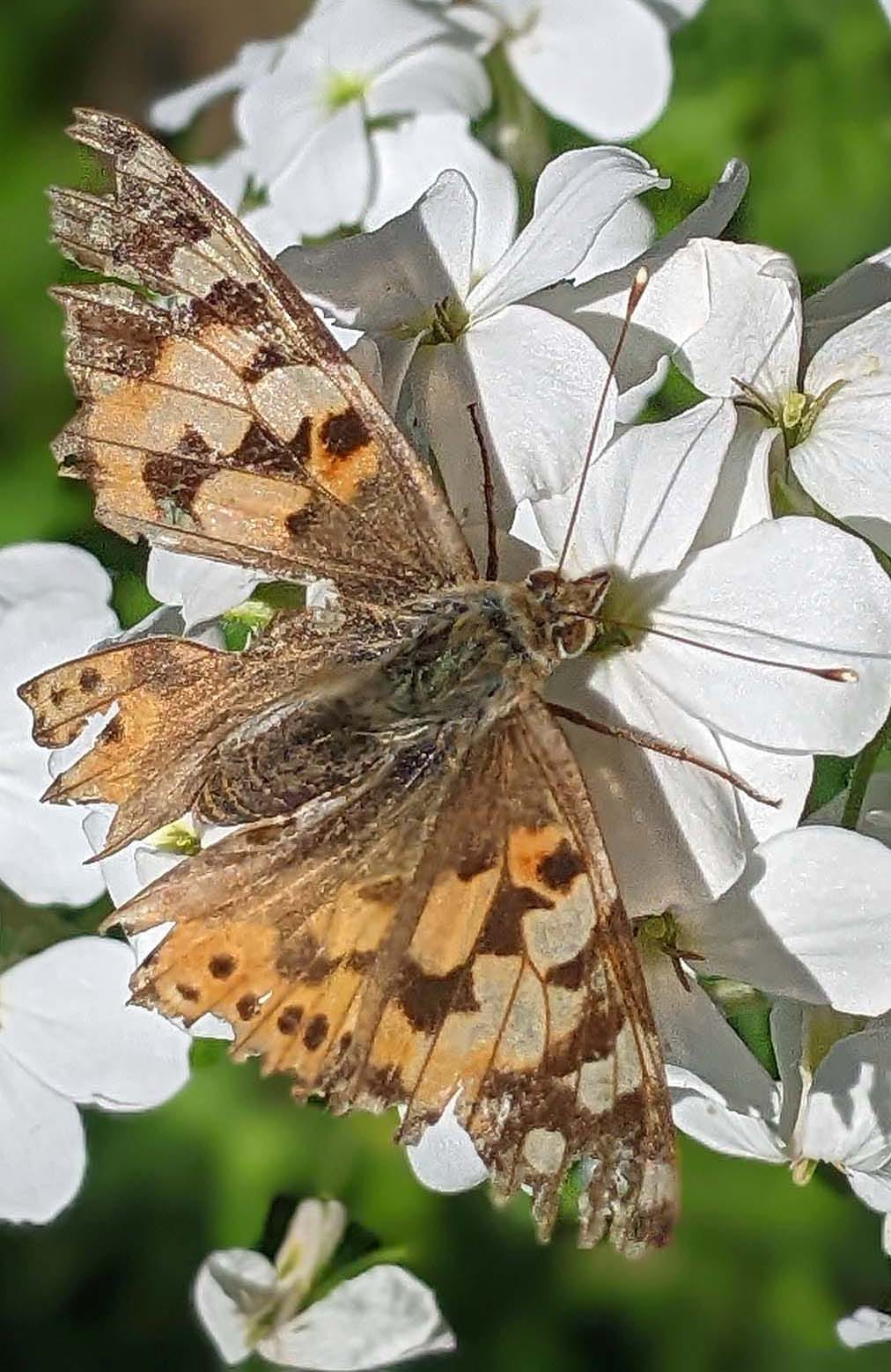
Hesperis matrionalis is a good plant for butterflies in general. This very travel-worn painted lady spent a whole afternoon nectaring on it, after a long migration from North Africa or mainland Europe.
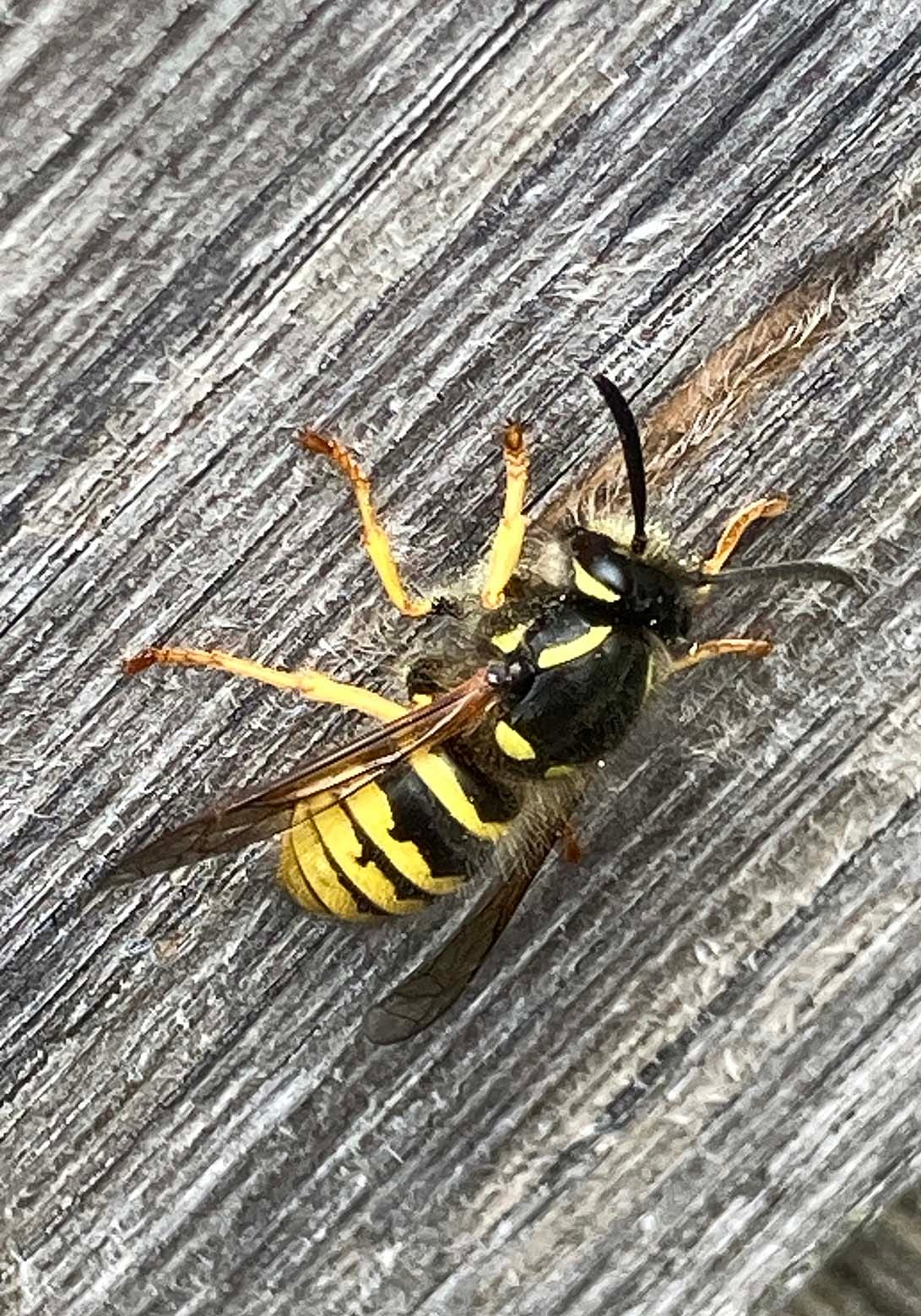
And finally, a gruesome postscript.
Insect and moth caterpillars are key elements in a food web that feeds bird nestlings, parasitic wasps and also social wasps, like this one. Here a worker is using its powerful jaws to chew wood fibres from an old garden seat, to use for making its paper nest. Those jaws are also perfect for cutting up caterpillars.
One afternoon I watched a wasp like this descend on an orange tip caterpillar that was too large to carry back to the nest to feed its brood. So it used those jaws to butcher the larva into three portable sections, returning twice to carry them away.
Butcher wasps seem likely to haunt my nightmares. A great post which sees me now in search of ‘Hesperis’.
Orange tips are my favourite butterfly. I feel so sad their flight season is over.