
Star-struck

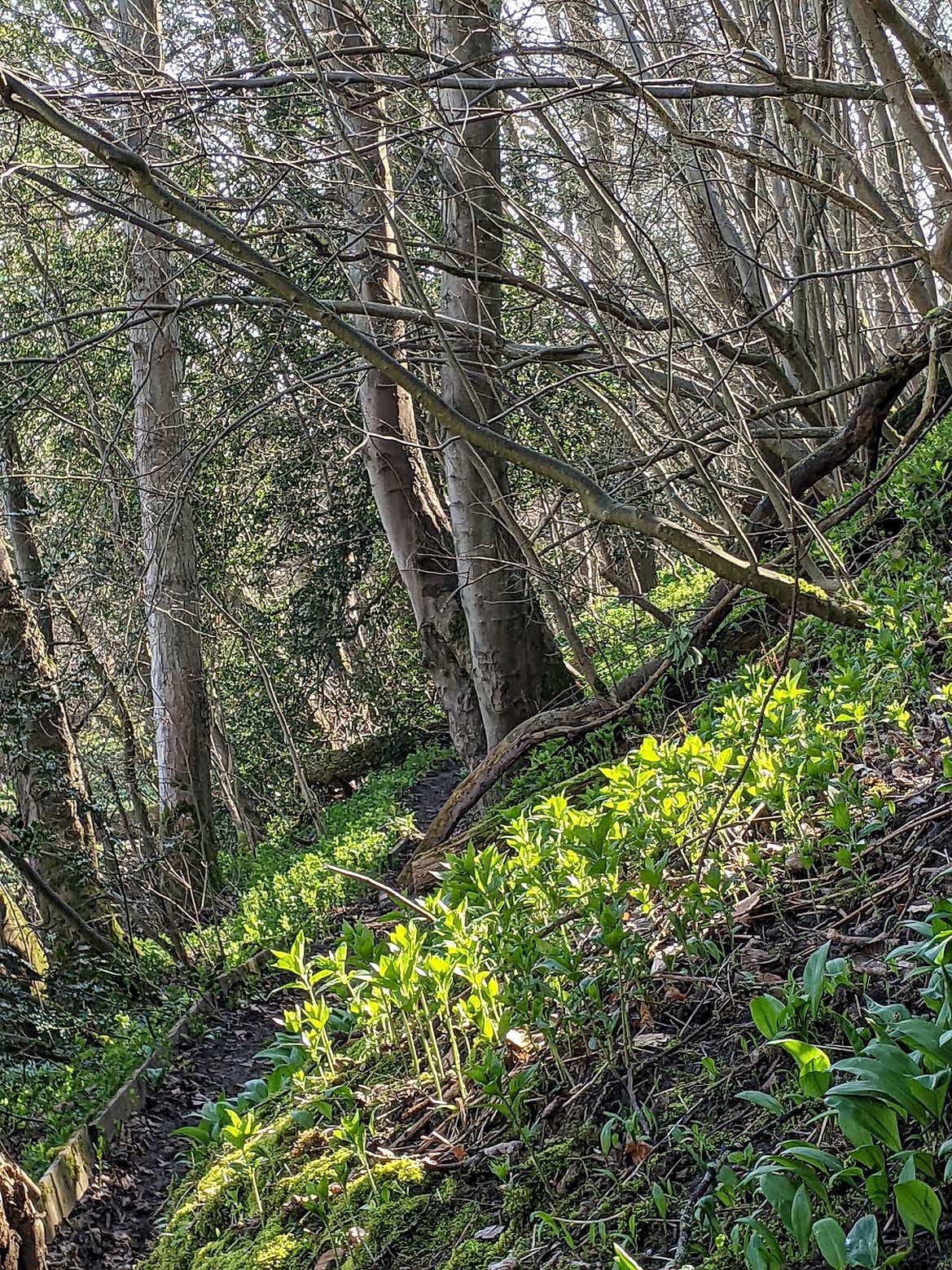
The Weardale Way is a 74 mile-long footpath hat follows the river Wear from its catchment at Cowshill in Upper Weardale to its confluence with the North Sea at Sunderland. I’ve walked this particular two mile section frequently, for half a century, and it’s always a good place to look for the first wild flowers of spring. Last week there was one particular reason for following this footpath …..
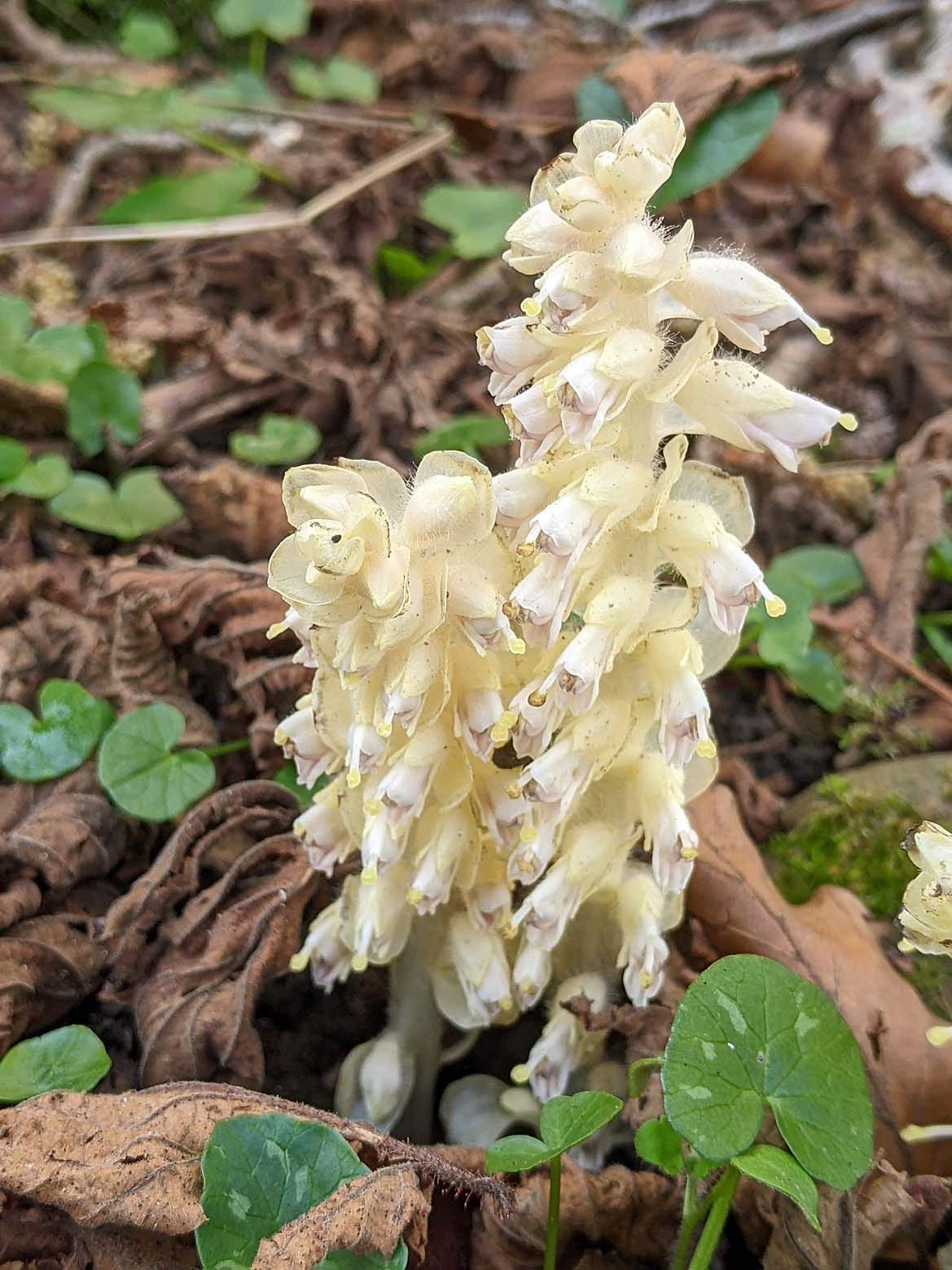
It wasn’t this that I’d come to look for, but toothwort Lathaea squamaria, a parasitic flowering plant, growing on the roots of some old coppiced hazels, is always good to find.
A plant that intrigued Charles Darwin, who wrote this in The Power of Movement in Plants, published in 1880:
‘The passage of the flower-stem of the Lathraea through the ground cannot fail to be greatly facilitated by the extraordinary quantity of water secreted at this period of the year by the subterranean scale-like leaves; not that there is any reason to suppose that the secretion is a special adaptation for this purpose: it probably follows from the great quantity of sap absorbed in the early spring by the parasitic roots. After a long period without any rain, the earth had become light-coloured and very dry, but it was dark-coloured and damp, even in parts quite wet, for a distance of at least six inches all round each flower-stem. The water is secreted by glands which line the longitudinal channels running through each scale-like leaf.’
Sure enough the soil immediately around newly-emerged flowering shoots is often wet, even though it was dry all around, just as Darwin described 150 years ago. It may be that the plant has to secrete water in this way to maintain a flow of nutrient-laden liquid through its stems. Normal plants with leaves use the evaporation of water from the leaf surface to ‘pull’ the flow of water through their xylem conducting vessels - toothwort has to secrete ‘tears’ to achieve the same ends...
Almost every wild flower book that I’ve ever read explains that the plant’s common name arose from the appearance of its flowers, which resemble rows of discoloured teeth, and then goes on to suggest that it acquired its name via the Doctrine of Signatures. This fanciful notion, which dates back to Roman times and the physician Dioscorides, claimed that plants that look like a part of the human body will cure that organ’s ailments. So with it’s toothy appearance, toothwort must surely be a cure for toothache.......
...... but there seems to be no evidence that anyone ever tried to use the plant in that capacity. In their scholarly work Medicinal Plants in Folk Tradition (2004) David E.Allen and Gabrielle Hatfield could only find one slight reference, in Gerard’s Herbal, to a medicinal use for the plant and that was to treat lung complaints. It seems that the use of toothwort in folk medicine for dental self-medication is one of those plausible myths that never dies but is endlessly repeated.
The Doctrine of Signatures owes much to the German botanist Phillipus Aureolus Theophrastus Bombastus von Hohenheim (1493-1541) who, unsurprisingly, is best known by his shortened, Latinised name: Paracelsus. He refined the concept and it was later taken to absurd lengths by the English herbalist William Coles (1626-62), whose book Adam in Eden, or Nature’s Paradise, wove together religion and botany, claiming that God created plants to look like body organs in order to signify their medicinal virtues to humans, extending the Doctrine far beyond the limits of credulity for all but the most devout.
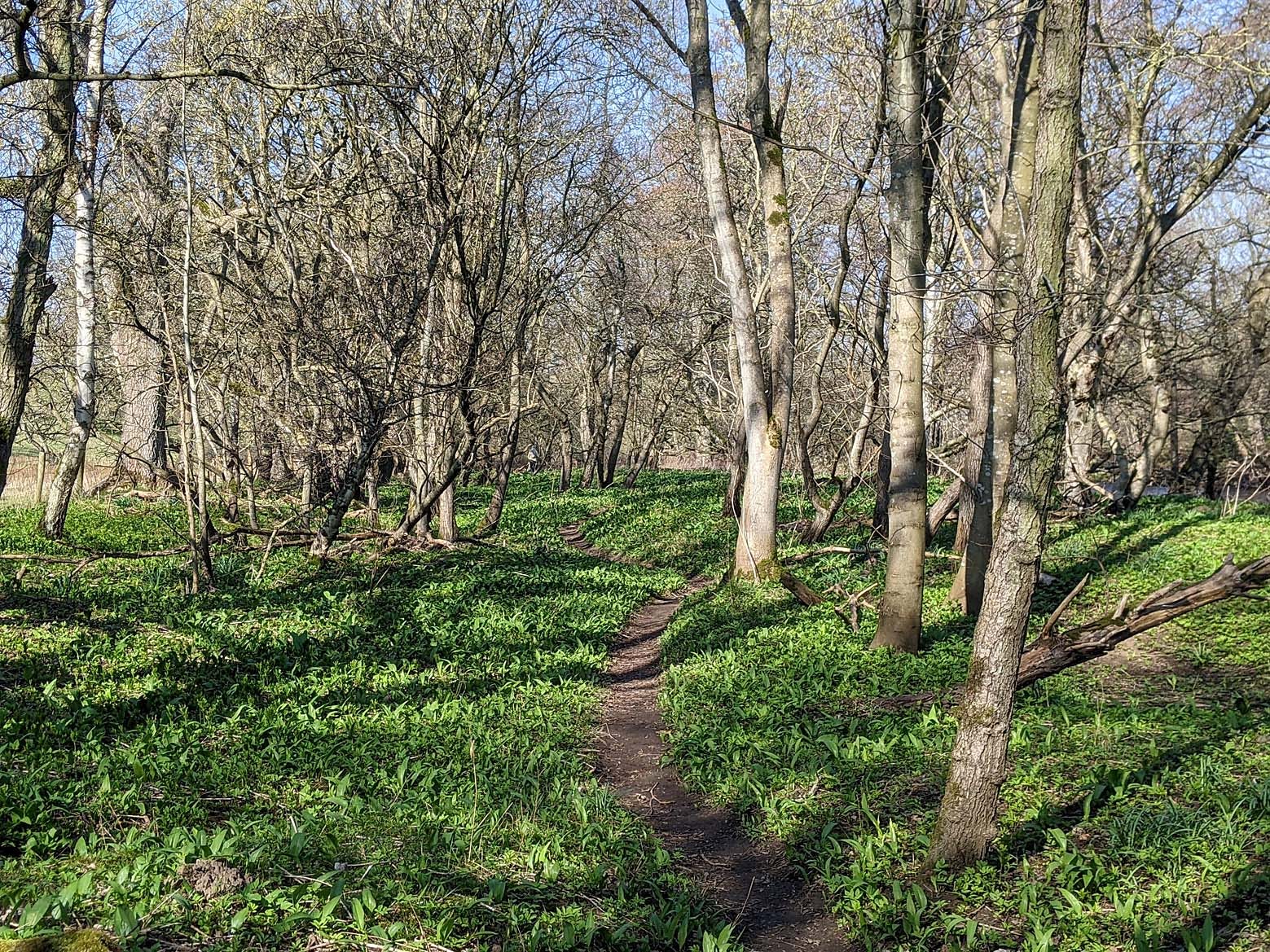
This section of the walk, open alder/birch woodland close to the river, low-lyig and frequnently flooded when the river is in spate. is usually a good spot for finding interesting plants ….
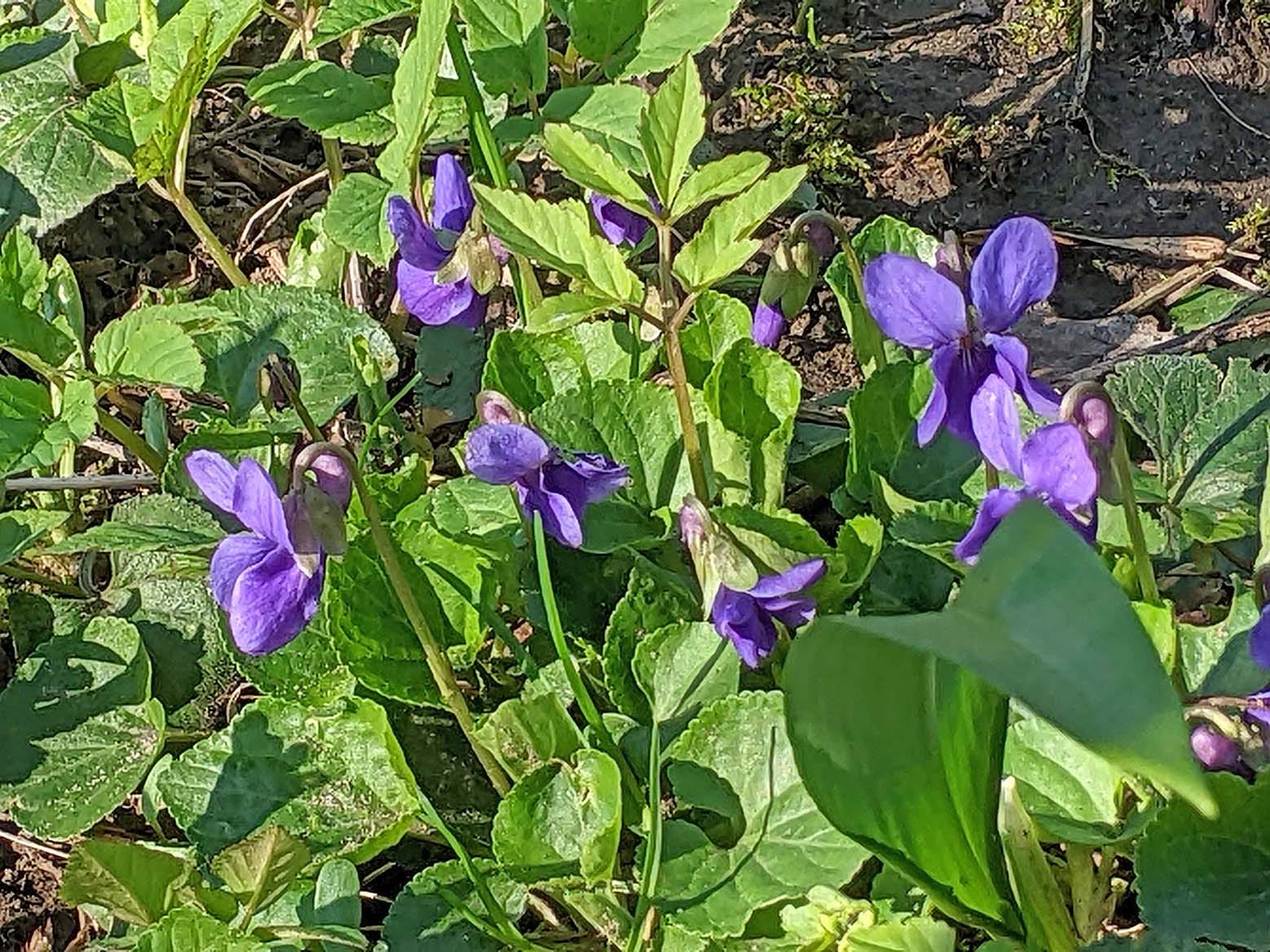
Last week there were sweet violets Viola odorata, the earliest of the native violet species to bloom. They spread via stolons and this patch, which was more than a metre across, has spread from a single plant that I first saw here four years ago. Violet seeds have a small, white, oily attachment, an elaiosome, that ants find irresistible. They carry the seeds away so, if you grow violets in a garden, seedlings are likely to appear in unexpected places. They’ll probably spread by similar means in this woodland.
Although sweet violet is a native species it’s often hard to tell whether they are genuinely wild or are descendants of plants that have been planted in gardens and have then escaped back into the wild after being dumped upstream with garden waste. Garden species that have turn up in this woodland, washed up in floodwater, include tulips, daffodils, Solomon’s seal, wolf’sbane, monk’shood, columbine and various ornamental lilies.
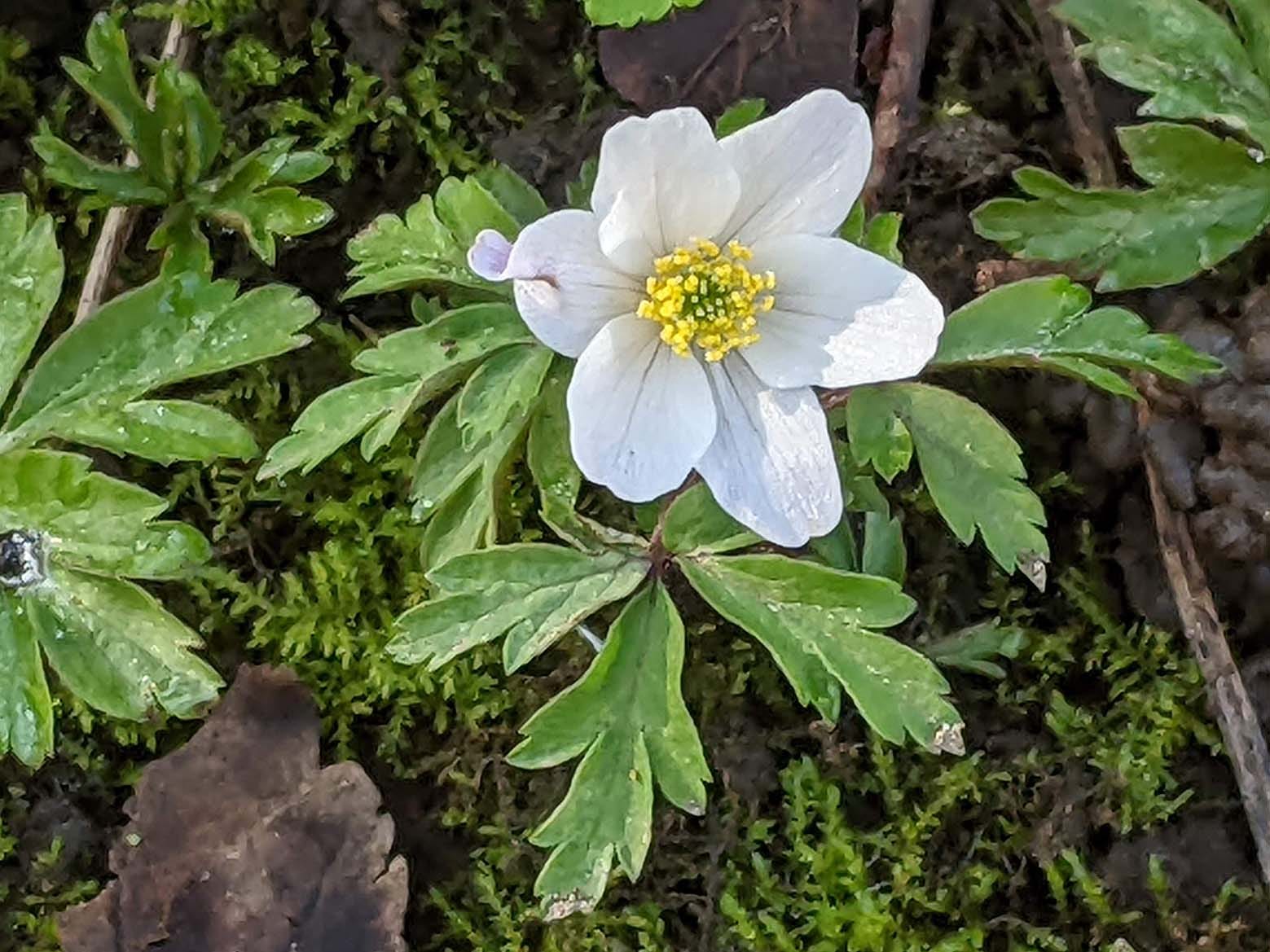
Wood anemone or windflower Anemone nemorosa coming into bloom.
Wood anemones grow very slowly, spreading via creeping rhizomes, so woodlands with large patches of this flower are likely to be very old. It sets few viable seeds and spreads at a rate of about six feet in one hundred years, according to Richard Mabey in his Flora Britannica.
It’s plants like this that highlight the foolishness of the practice of allowing developers to ‘offset’ destruction of old-established woodlands by planting new ones on open fields. Assuming it is possible, it would take centuries to replicate the drifts of wood anemones that are one of the defining features of ancient woodlands.
It was bright and breezy when I found these, perfect weather for a plant whose scientific name comes from the Greek word for wind, anemos. When a gust blows across the woodland floor thousands of anemone flowers shiver on flower stalks that are as slender as a thread.
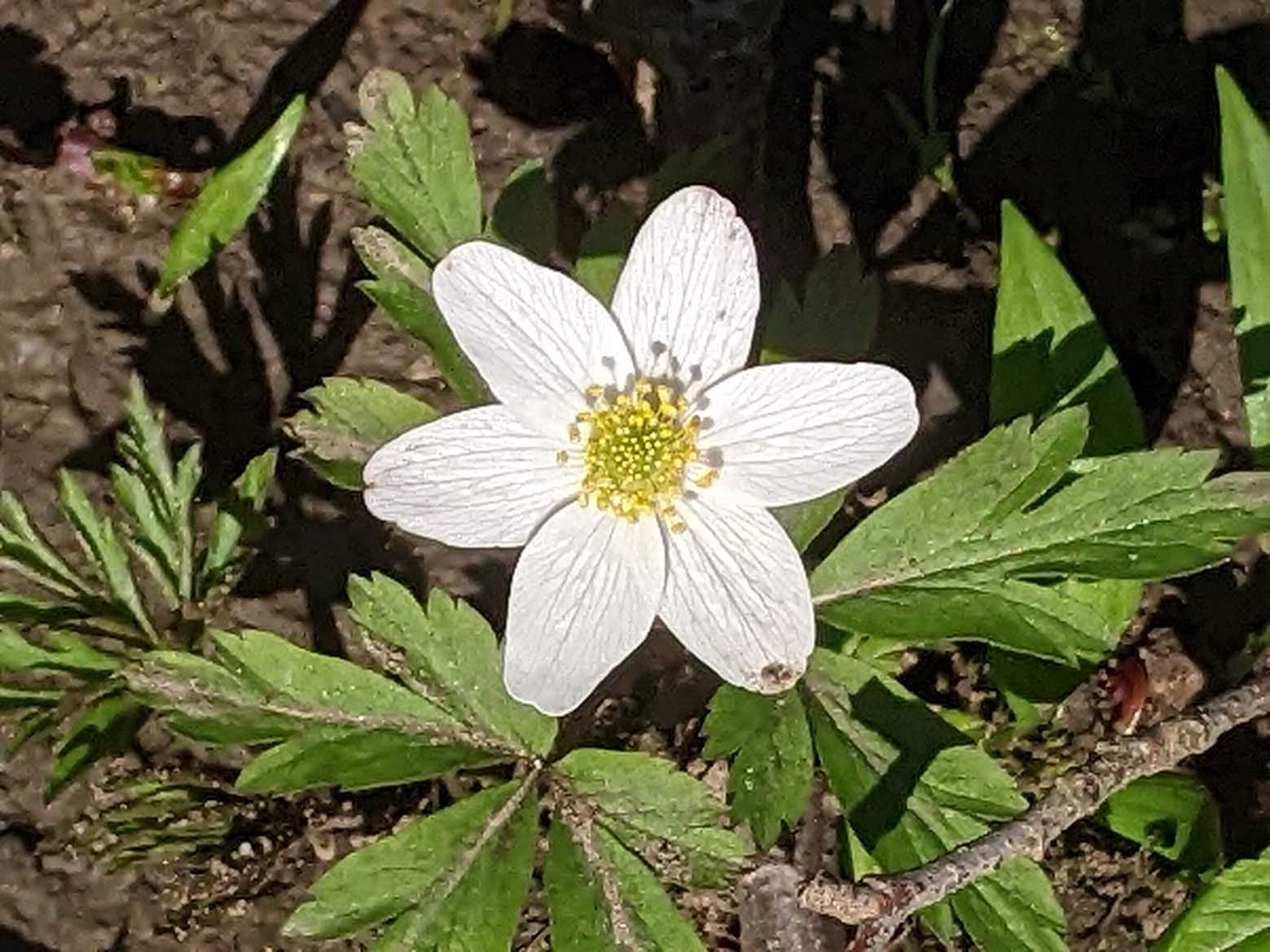
Many modern books on British wild flowers repeat the story that the Roman naturalist Pliny (c. 77AD) believed that it was the wind that brought anemones into bloom in the spring ( ‘The flower never opens, except while the wind is blowing, a circumstance to which it owes its name’ ); however, it might not have been this species that he had in mind, but the far more robust, scarlet-flowered Anemone coronaria that blooms throughout the eastern Mediterranean in spring.
Pliny’s writings are fascinating source of natural history information, some of it fanciful, some of it accurate and perceptive: you can consult them on-line
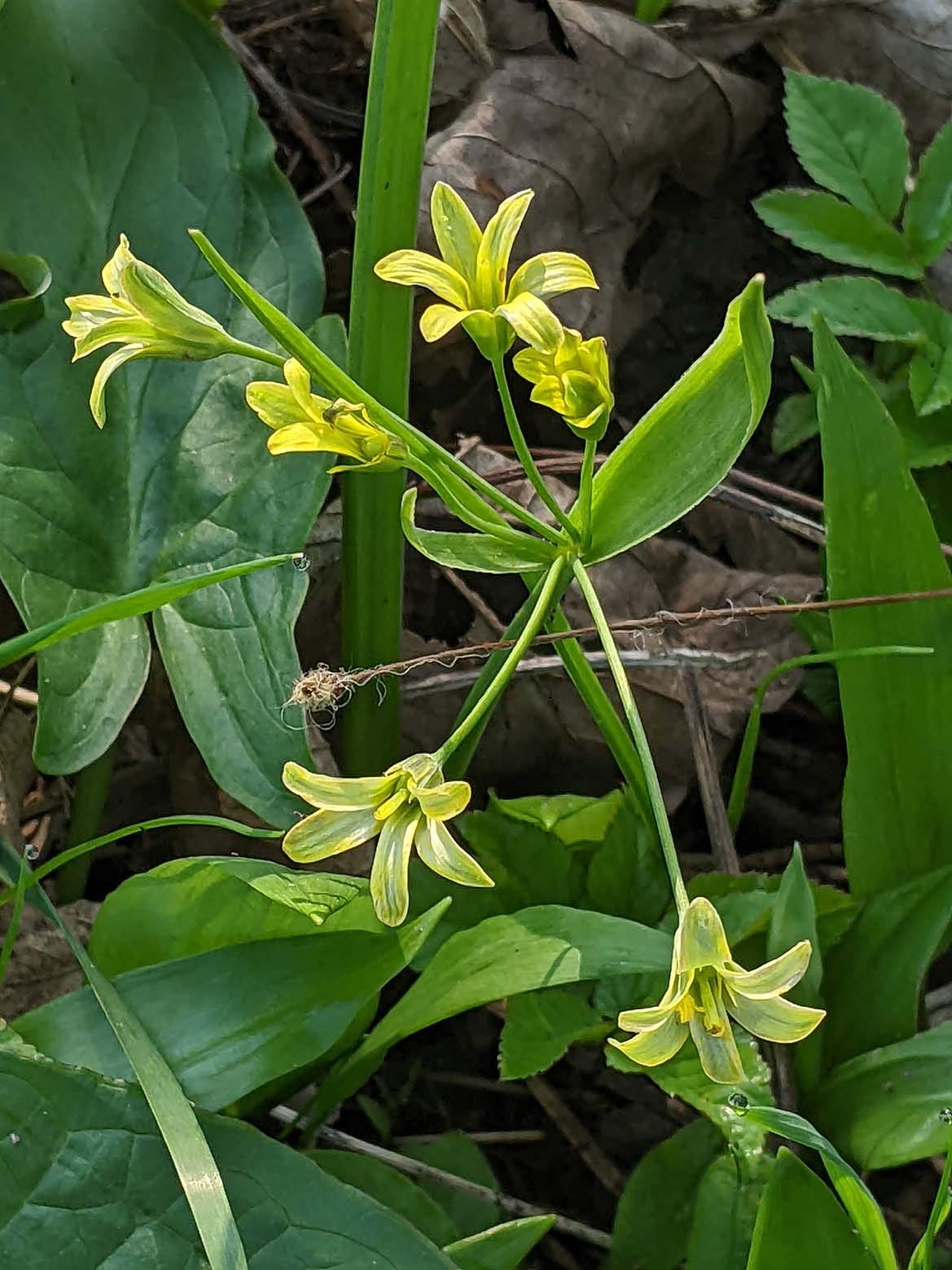
Found it! This is what I came to look for - yellow star of Bethlehem Gagea lutea.
I first encountered it along this riverbank on a late March morning 50 years ago, soon after coming to live in County Durham. Then, I found a single flowering specimen. It was so unfamiliar that I thought it must be another garden escape, only realising it was a scarce native after consulting wild flower field guides.
Last week there were half a dozen plants in flower beside the footpath, but you can never be sure how many are there because they don’t all flower every year; when they do, each flower remains green until the petals briefly turn yellow and face the sky for a day or two before fading.
Best appreciated on hands and knees, this plant is little more than a few short, thick grass-like leaves and a 10cm-tall umbel of small yellow flowers that usually open at the same time as lesser celandines and can be hidden amongst them.
Luck plays a large part in finding it, but I’ve searched this same place every spring and have usually located a plant or two. Part of the charm of these tenacious little survivors is that they have endured for five decades in such an inhospitable spot, inundated by the river Wear’s floods in winter and annually buried under sandy silt. By mid-April they will be almost impossible to find, hidden in the shade of expanding leaves of the surrounding sweet cicely, ground elder, ramsons and meadow crane’sbill.
In a month they will have withered back to underground bulbs for another year. But for a moment their fugitive beauty brought particular pleasure with the knowledge that, for another year at least, all was well in this particular corner of our local patch after what seems to have been a long winter.
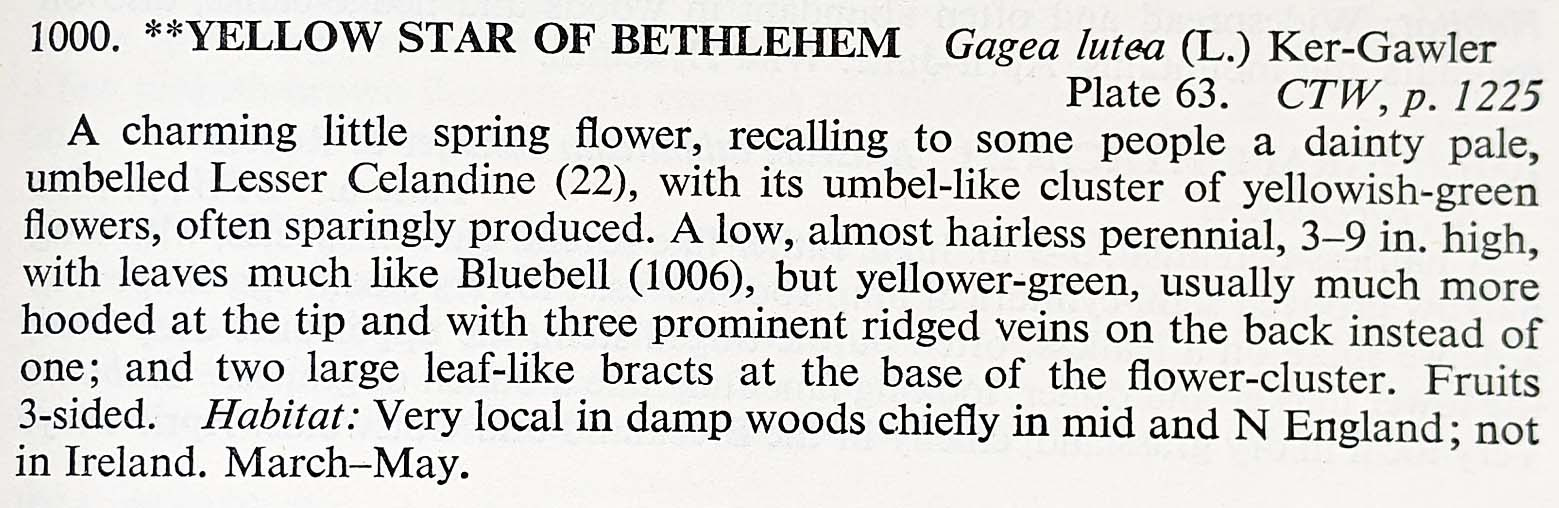
A confession. I bought my first proper wild flower field guide 62 years ago - David McClintock and Richard Fitter’s The Pocket Guide to Wild Flowers - and still have it. We’ve grown old and dog-eared together. One of the things I’ve always liked about it is the stars system for indicating rarity: no stars for common, one for locally common, two for scarce, three for real rarities. It appealed to a 13 year-old’s collector’s instincts and, truth-be-told, still does. Yellow star of Bethlehem is a two-star find!
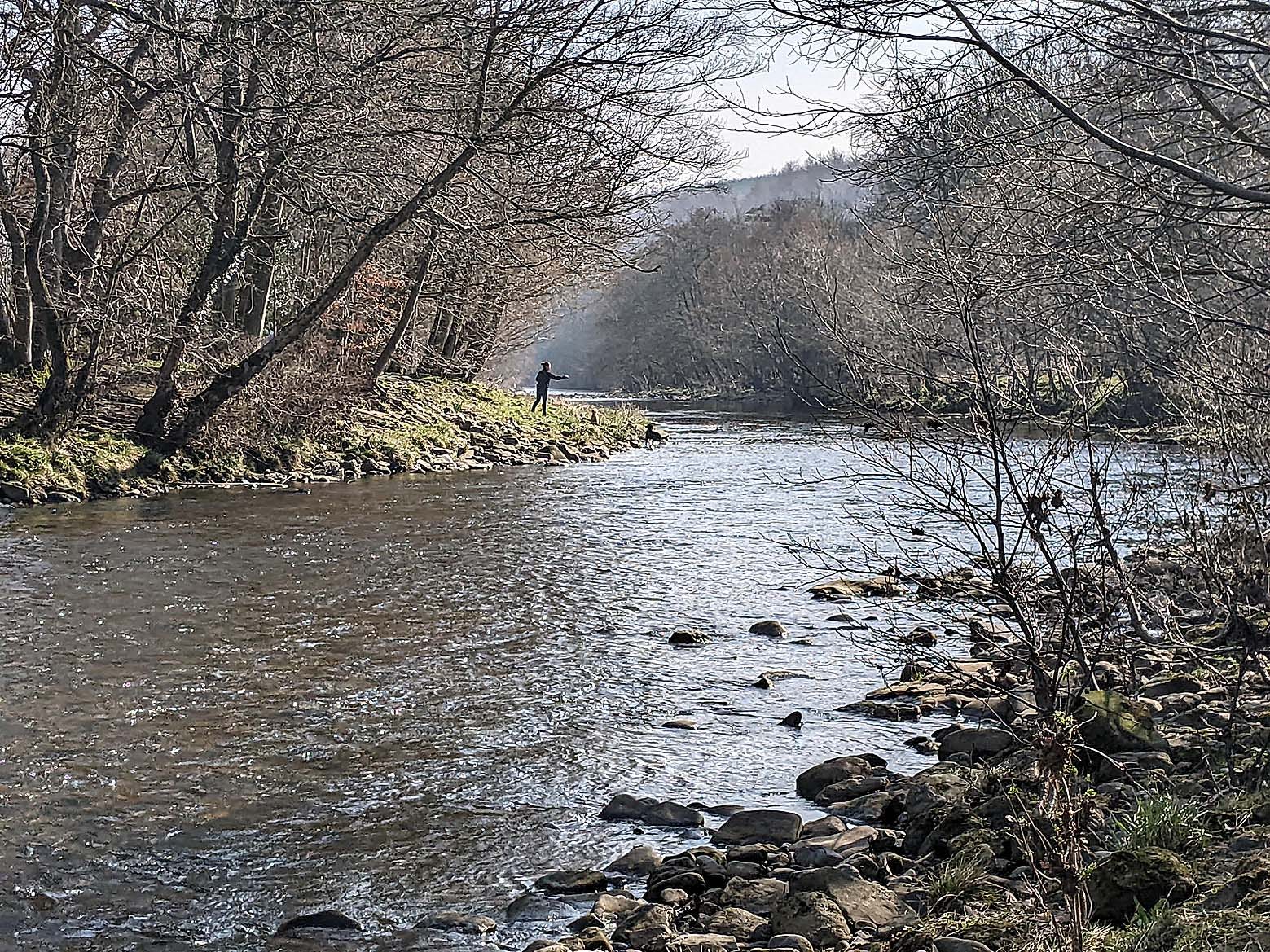
The river Wear, from the Weardale Way footpath at Black Banks. There are more botanical and natural history delights around the bend in the river, but they are for another day ……
Super - I didn’t know that Darwin had written about Toothwort. I shall have to go out now and find Bethlehem, i have never seen any and probably won’t today but I will enjoy looking for them
This was a really interesting and enjoyable read. Thanks Phil!