
A weevil playing possum, aromatic umbellifer seeds and tansy in a churchyard

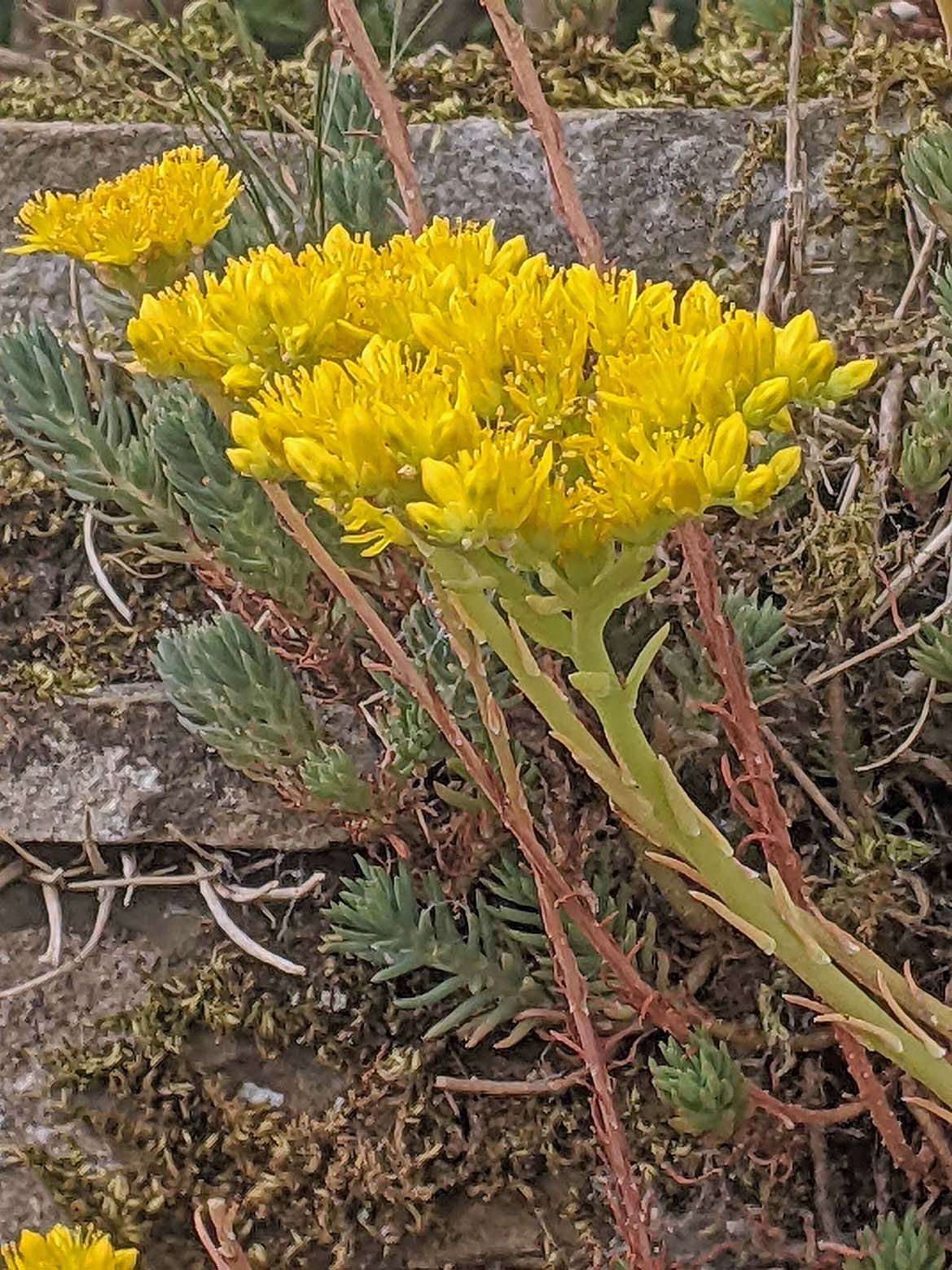
Reflexed stonecrop Sedum rupestre, thriving amongst withered mosses on a drystone wall in Weardale.
A triple-whammy of heatwaves has frazzled plant life in parched earth everywhere, but few plant habitats suffer such a severe test of drought tolerance as a sun-drenched stone wall. Stonecrops take it in their stride, thanks to succulent leaves that can store water.
The commonest and most widespread native Sedum species is biting stonecrop Sedum acre, whose starry yellow flowers adorn walls and sand dunes. Its leaves are said to be edible, with a peppery ‘biting’ taste, which may be why reflexed stonecrop was introduced from mainland Europe in the 17th. century as a salad crop, eaten when its new leaves are fresh and succulent in spring. Reflexed sonecrop escaped from gardens soon after it arrived and was first recorded in the wild in 1660.
The plant in the photograph is growing on the garden wall of a Weardale farm that dates from the late 17th. century, so maybe the original occupants also grew it for food.
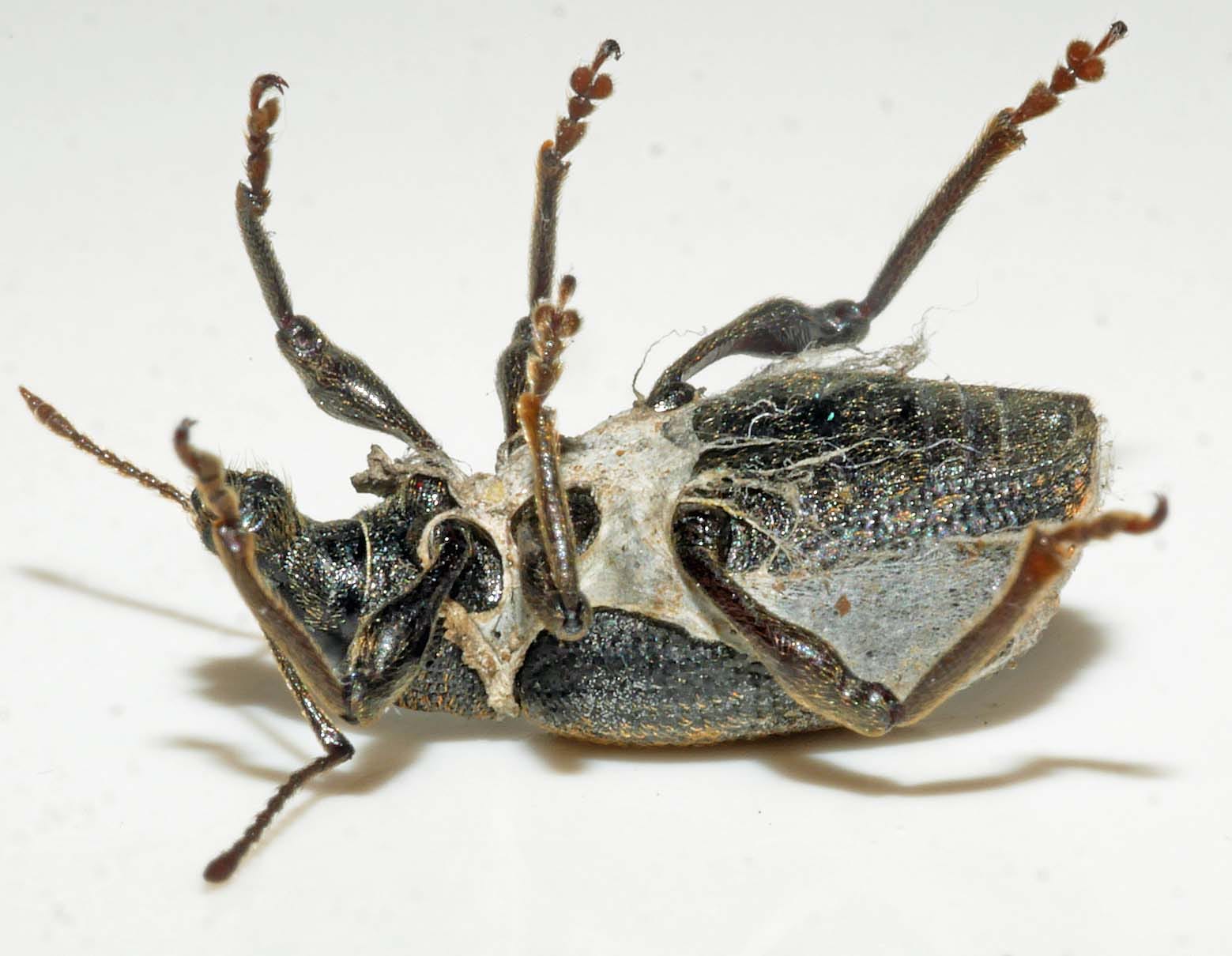
Our bath acts as a giant pitfall trap for spiders, woodlice and silverfish that often become trapped when they come to drink from a dripping tap, but this was the first weevil that has fallen in.
At first, I thought it was dead, laying on its back with legs in the air but it was performing thanatosis - the strange behaviour of some animals that pretend to be dead when they are threatened. It’s also known as ‘playing possum’, because the most famous exponent is the Virginia opossum, but many other animals do it, from grass snakes to tiny insects..
This particular individual seemed to have had a close encounter with a spider’s web and was wearing some of it like a silken vest.
The adult vine weevil is a slow-moving cumbersome beetle that cannot fly, so when disturbed it simply tucks its legs under its body and either drops to the ground or rolls onto its back, keeping perfectly still. In this state it’s hard to spot in the soil. Eventually, when it thinks the coast is clear, it stretches out a tentative leg, rocks itself until those sickle-shaped claws grip a leaf, hauls itself right-way-up and ambles away.
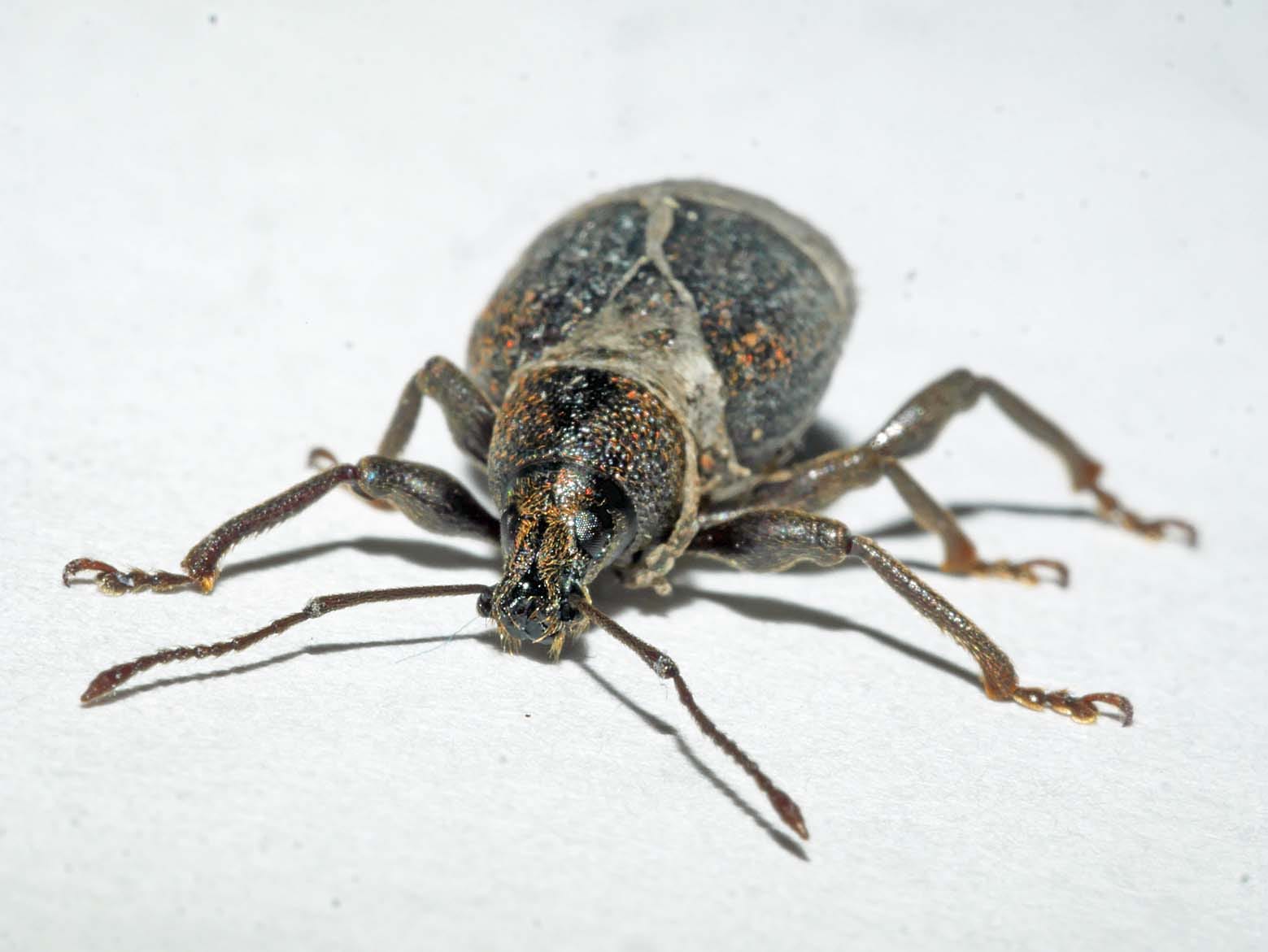
Vine weevils are notorious horticultural pests, because their larvae feed on the root systems of garden plants - especially those grown in pots. The first sign of their presence is wilting of the leaves, by which time they have destroyed most of the root system, symptoms I became aware of when my collection of show auriculas was devastated by their larvae.
Vine weevils are parthenogenetic, laying fertile eggs without the need for a male to fertilise them, so it only takes one weevil to start an infestation.
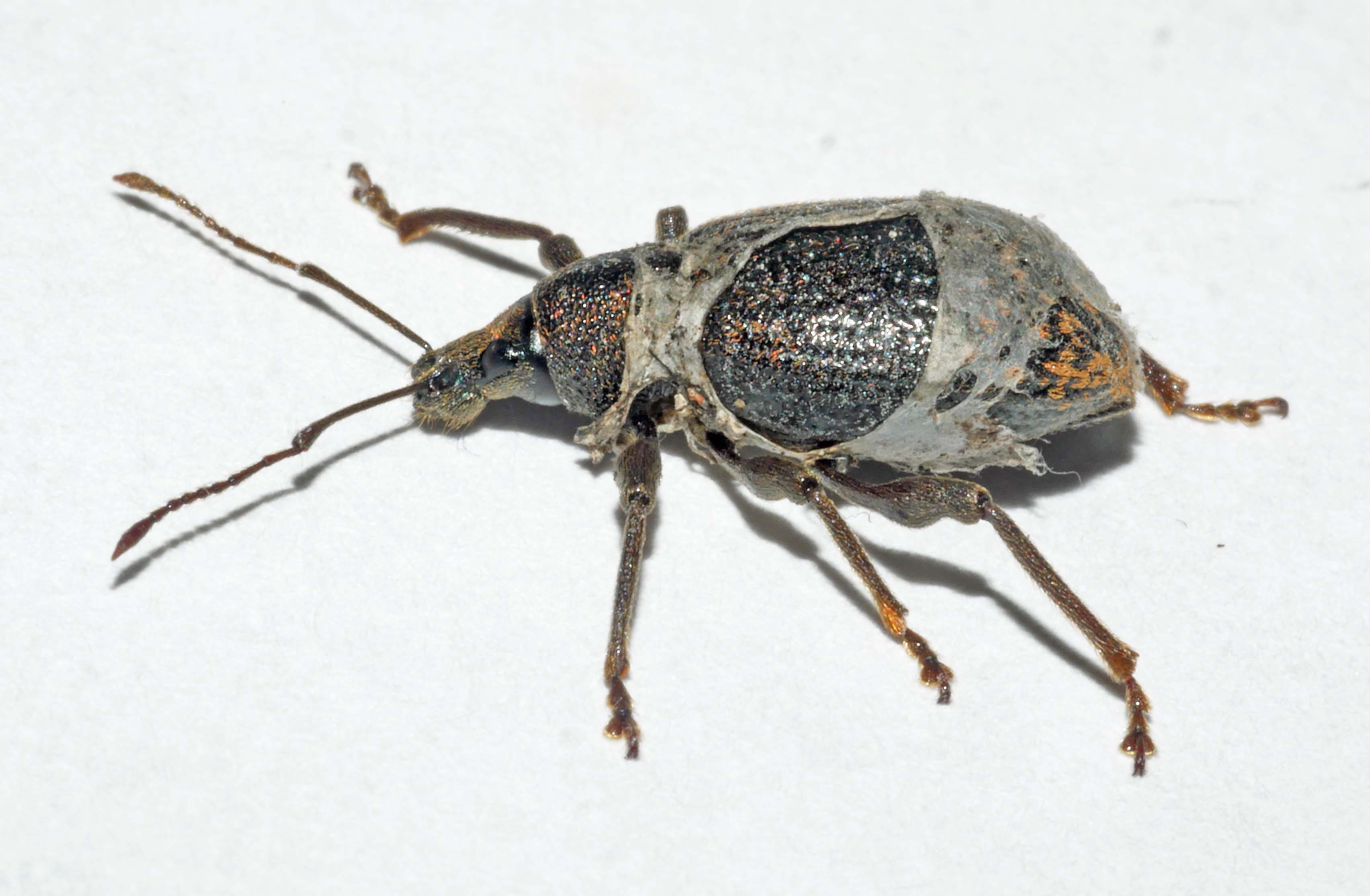
Since they can’t fly, the vine weevil in our bath must have either climbed in through an open window, arrived on our clothing or had been carried in on towels dried on the washing line in the garden.
A random digression on thanatosis
If, like me, you were a teenager in the 1960s you might have listened to a rock band called the Grateful Dead, headed by Jerry Garcia and noted for their eclectic range of musical genres.
Taxonomists - those who assign scientific names, rooted in Latin and Greek, to newly-discovered species, - are not generally noted for whimsy, but in 1987 one fan of the Grateful Dead, entomologist John H. Epler, honoured them with a scientific name for a new midge species that performs thanatosis - Dicrotendipes thanatogratus. The specific epithet, thanatogratus, means ‘grateful dead’, amalgamating thanatos (Greek for “death”) with gratus (Latin for “grateful”)
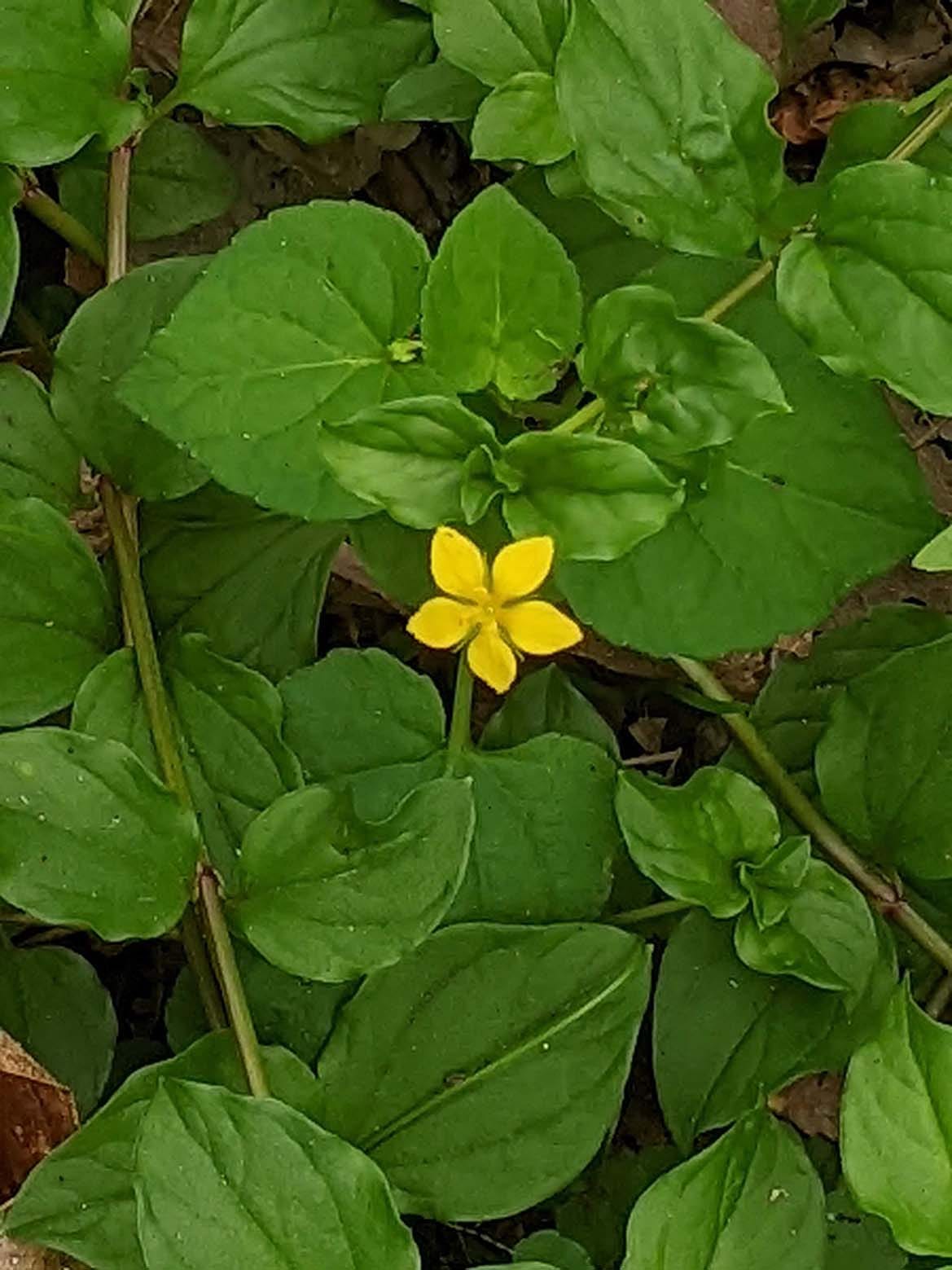
All the familiar woodland flowers seem to have raced through flowering very quickly in the intense heat and this little yellow pimpernel Lysimachia nemorum was one of the few species still in bloom in Backstone Bank wood this week. A common ground-hugging member of the primrose family that prefers damp, shady woodland. It doesn’t produce many flowers, so is easily overlooked.
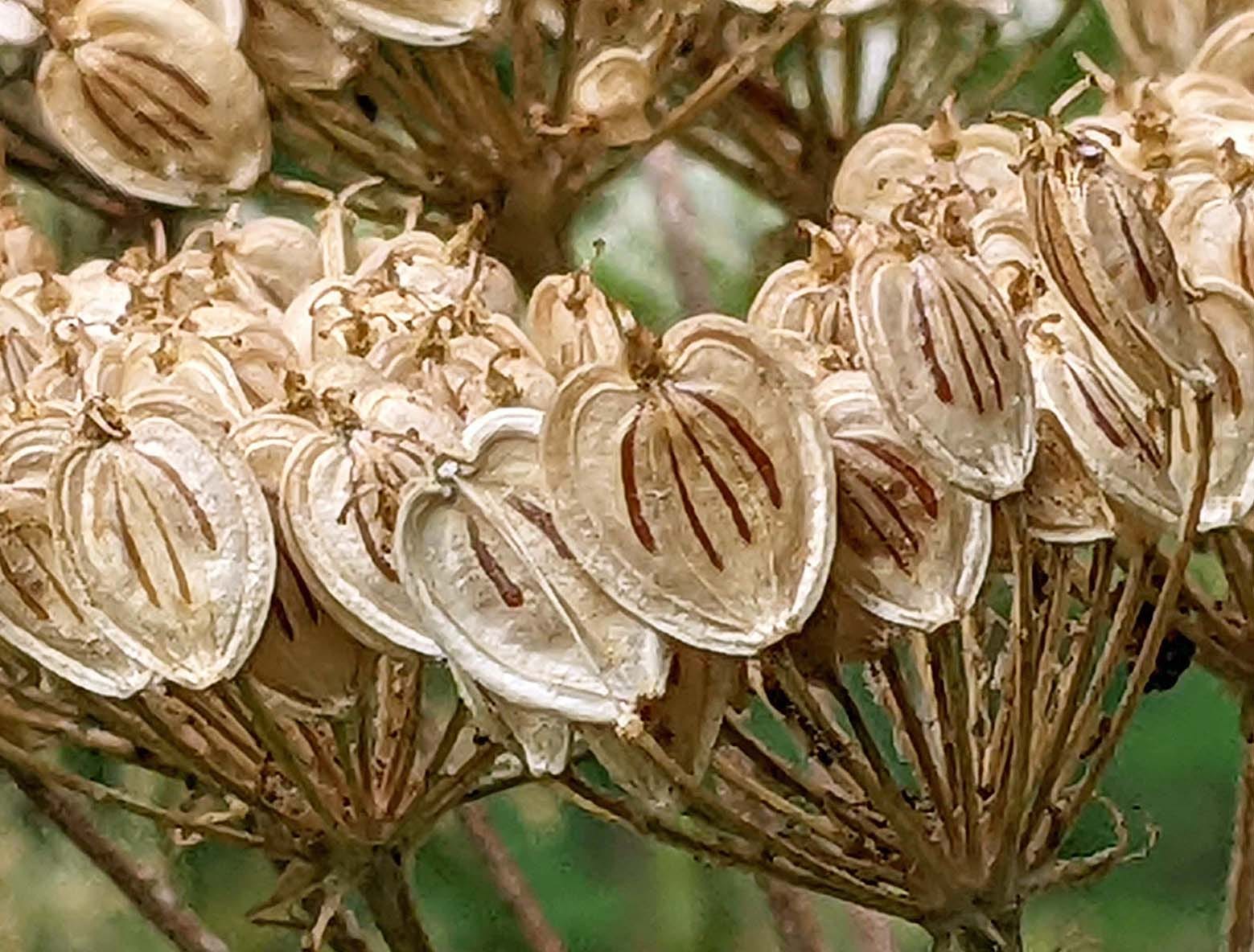
The carrot family includes several species with seeds containing aromatic compounds that are used as flavourings – cumin, fennel , celery and caraway are notable examples.
Hogweed Heracleum sphondylium seeds, which are not edible, contain a fruity, aromatic oil that has a very refreshing scent – try crushing some ripe seeds between finger and thumb and you’ll see what I mean. The oil is concentrated in those dark brown stripes, which are oil glands.
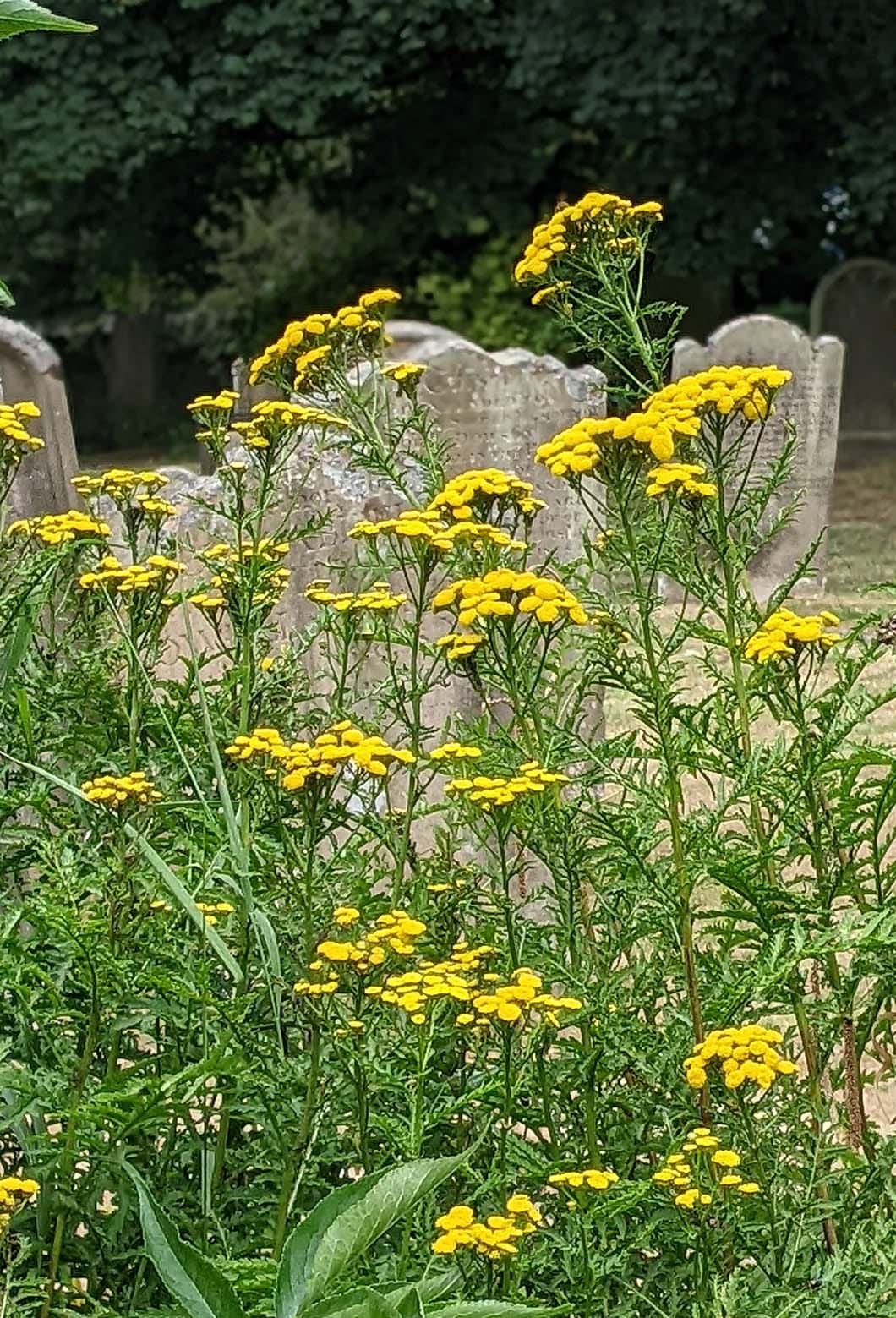
Tansy Tanacetum vulgare, flowering in Wolsingham churchyard this week.
A wild flower species that’s often found near human habitation because it was so convenient to be able to gather it close to home.
Full of pungent chemical compounds, of untested toxicity, its leaves, at various times in history, have ben recommended by herbalists -
as an antiseptic treatment for wounds
for enhancing female fertility and preventing miscarriages. “Let those women who desire children,” wrote Nicolas Culpepper, “love this herb, ‘tis their best companion, their husband excepted,”
as food flavouring, in tansy cakes made with milk, eggs and flour
as an insect repellent, rubbed into fresh meat to keep flies away
in burials, interred with corpses to keep worms at bay
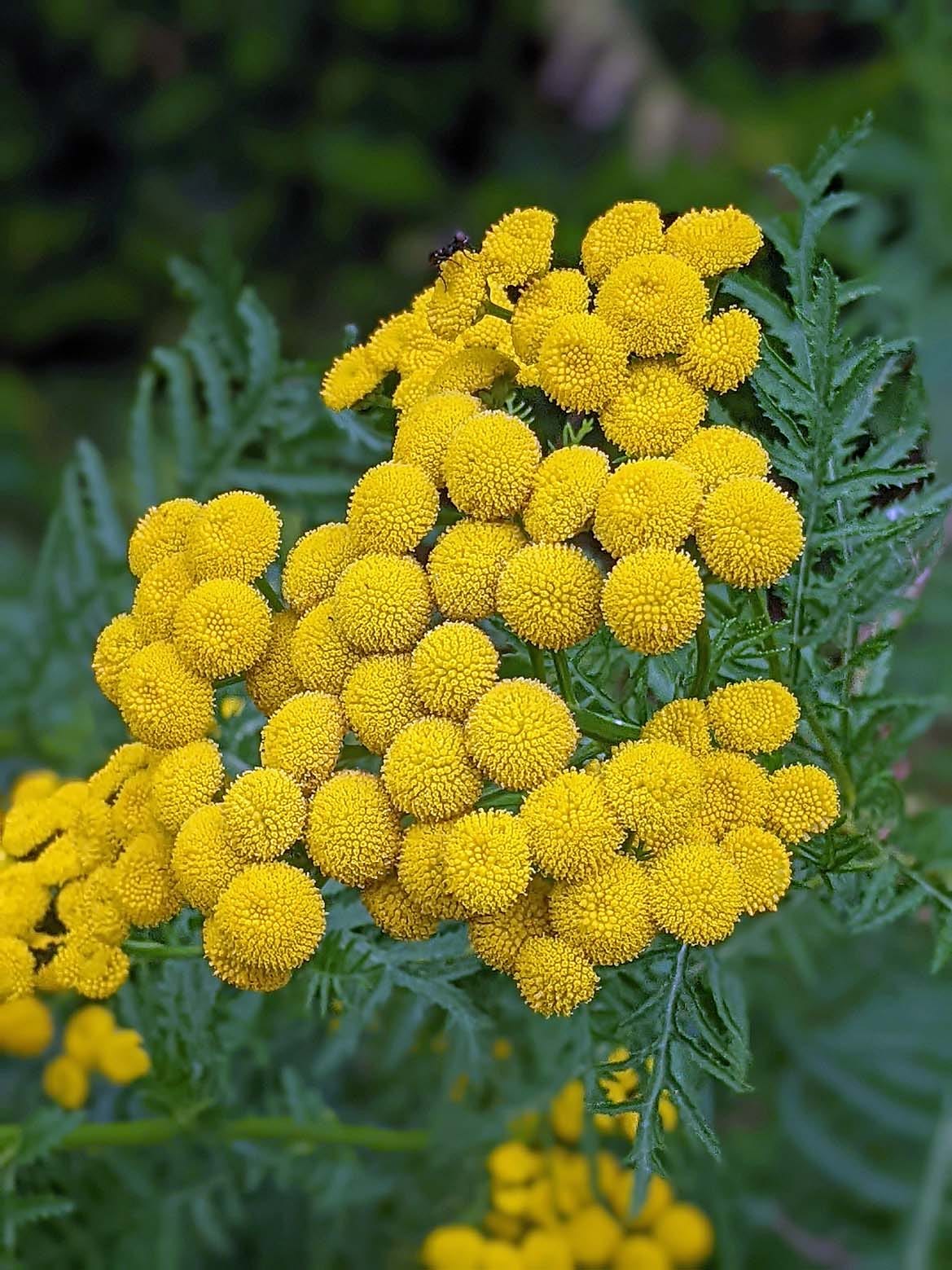
Some know the golden inflorescences of tansy as ‘bachelors’ buttons’, a colloquial name applied to numerous other wild flowers. Geoffrey Grigson, in The Englishman’s Flora, listed the same name, applied in various counties, to flower of marsh marigold, buttercups, columbine, red campion, white campion, greater stitchwort, shining crane’sbill, herb robert, pennywort, lesser periwinkle, field scabious, devil’s-bit scabious, burdock, cornflower and knapweed.
And that, in a nutshell, is why an internationally agreed scientific name, derived from classical languages that are universally recognised, is such an aid to communicating knowledge about the living world, avoiding confusion.
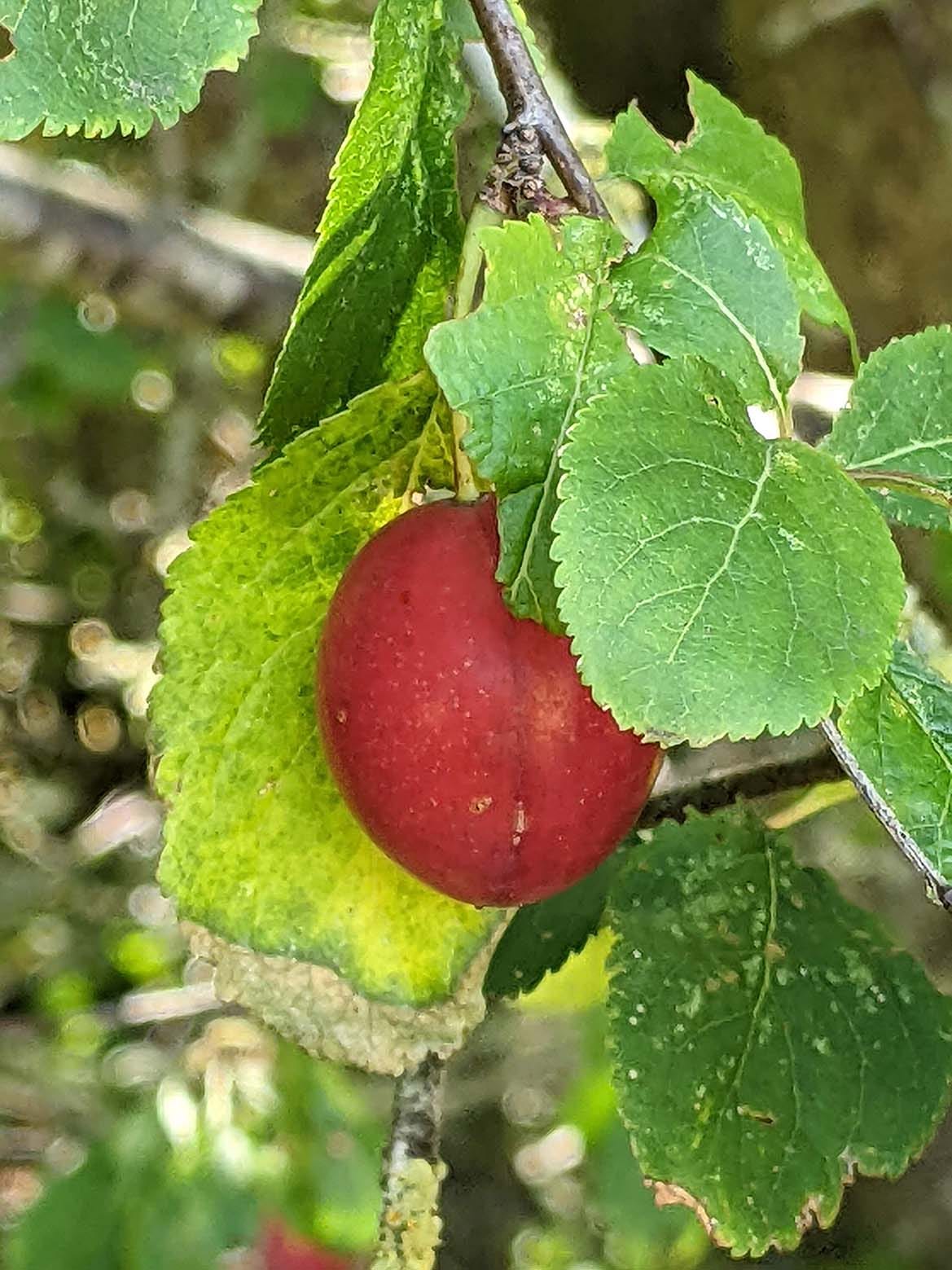
Cherry-plum Prunus cerasifera, the first hedgerow tree to blossom in early spring, has produced a good crop of fruits that are almost ready to pick. There are red-fruited and yellow-fruited forms in our local hedges. The yellow-fruited ‘mirabelle’ form makes a particularly attractive golden plum jam.
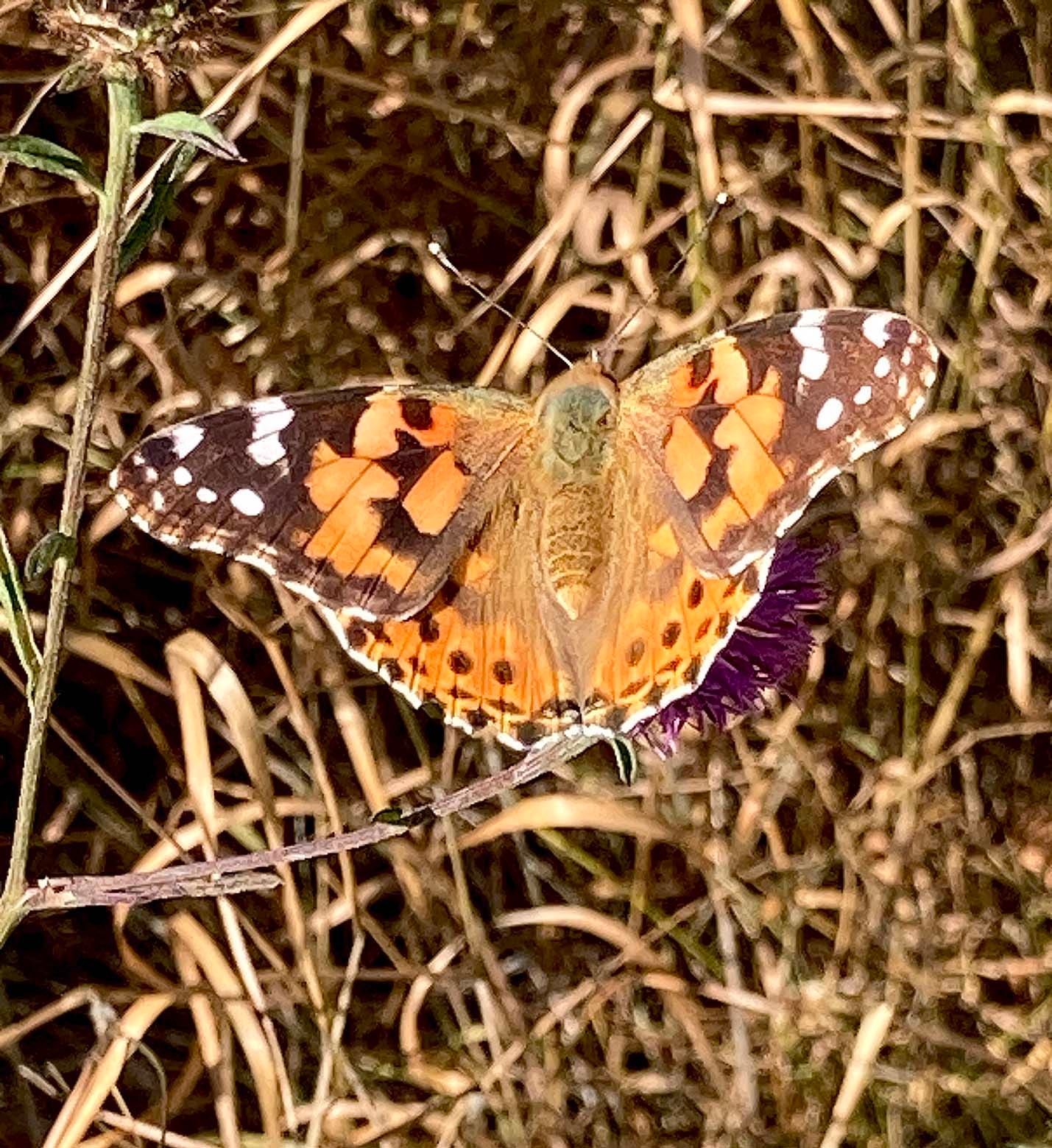
And finally, the migrant painted lady butterflies that arrived in early May and laid their eggs on nettles and thistles have produced a new generation. There’s still plenty of time left for them to breed again, so by mid-autumn we could see the culmination of what might turn out to be an epic painted lady summer, as predicted by many lepidopterists.
This was one of dozens seen this week on the old Brancepeth colliery site in the Wear valley this week.
Lovely post. I've never seen a large weevil beetle before. Always small and indistinct. Hogweed always had the reputation for poison, esp the giant variety. Thank you for the post.
So many Painted Ladies! Our garden is full of them.